

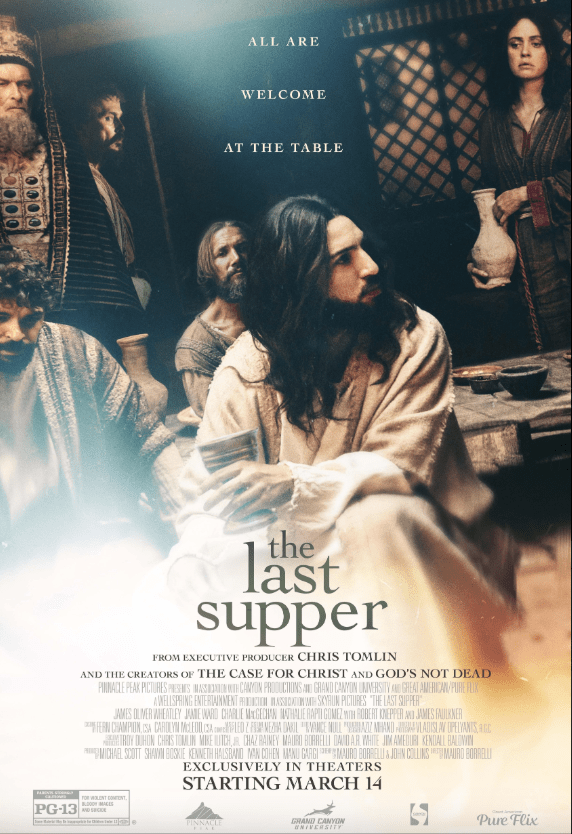
A few months ago, I received an email advertising a new film “by the producers of The Case For Christ and God’s Not Dead movies. This didn’t immediately inspire me to watch the movie, but when I received a follow-up with an invitation to pre-screen the movie, I decided to give it a go. I seriously despise it when folks, even if well-intentioned, promote or warn against TV shows and movies without ever at least watching to see for themselves. It is intellectually dishonest to do so. So I went ahead and signed up to watch. I nearly forgot about the link and password sent to watch it until yet another follow-up asked for my thoughts on the film. So I opened up the previous invitation and the link no longer worked. A short email back brought me a fresh link and password to watch. I spent a couple of hours yesterday afternoon carefully watching. What comes next are my honest and “in the moment” observations, and some closing thoughts. I am certain viewers will sing the praises of this movie, and there are parts that are pretty well done, and the story of the last week of Jesus’ ministry ought to stir in us (especially those who have been redeemed) a greater appreciation for the season we are entering (this film is officially being released intentionally to coincide with the more liturgical church calendar period known as Lent, the run-up to Easter).
WARNING! SPOILER ALERT (the following will contain details that may spoil the viewing experience):
My initial observations, though I am certain I missed some things were I to watch again:
- This comes across as mash up of “The Chosen” and Gibson’s “Passion of the Christ”. It is distinctly dark.
- The producers take some liberties in the order/timeline in presenting factual/biblical bits.
- Some of the darkest scenes are of Judas Iscariot and some type of personal demonic debate on whether he is going to betray Jesus – using an actual snake and a “demonic voice”, and in once scene, a demonic-looking figure. OF course, that isn’t biblical.
- The “Jesus” character doesn’t seem to be taken as flippantly as Jonathan Roumie of The Chosen.
- Quite a bit of effort made to bring sympathy on Judas, especially in his meeting with Caiaphas to betray Jesus.
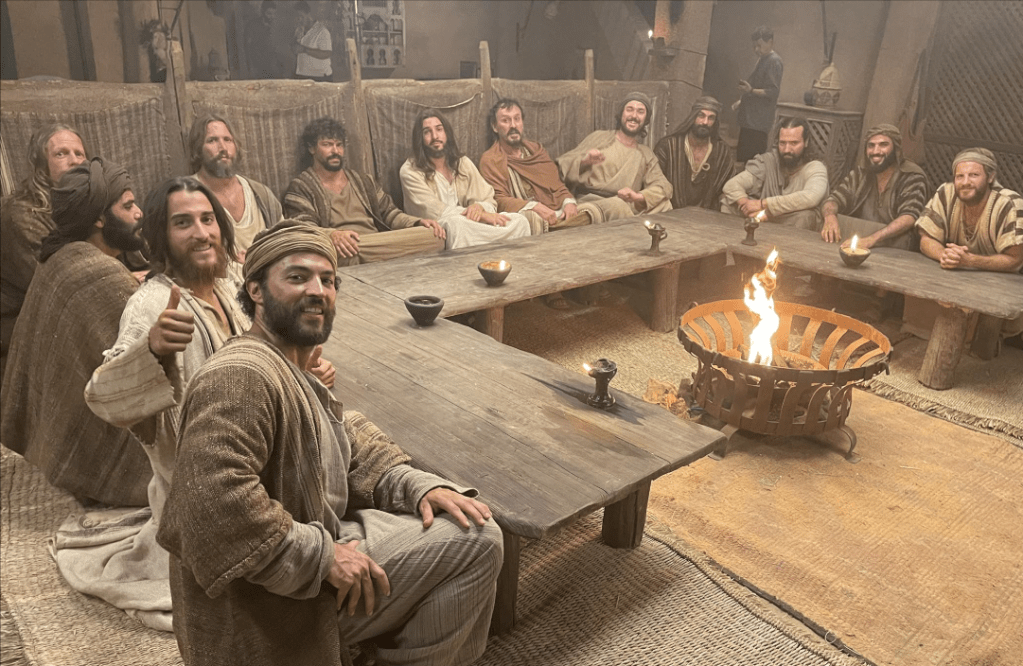
- the “Supper” itself actually did a pretty decent job of paralleling with the traditional Passover meal and bits of its symbolism.
- A totally unbiblical conversation between the Peter, James, & John while Jesus went on to pray.
- The beating/whipping of “Jesus” by the Temple guards even before the sham trial before the Sanhedrin… where did that come from?
- almost entirely fictitious conversation by the high priest and Jesus.
- there is even a scene nearly copied from Gibson where Peter, upon denying Jesus for the 3rd time, is on the ground and locks eyes with Jesus being scourged (never mind that this scourging isn’t even being done by the Romans, but by the Temple guards…???)
- and Judas’ suicide scene – with that demon figure snarling and watching…
- Peter wallowing through the rainy streets of Jerusalem crying over denying Jesus, stumbles on to Judas Iscariot’s freshly hanged corpse, makes for a mega-dramatic, even if dramatically UN-biblical scene… Add in that snake representing the devil/demon showing up again, this time to speak to Peter, tempting him to hang himself too..
- The scene from this point to Jesus’ appearance on the shore of the lake as the disciples went fishing contains a great deal of drama with flashes of the crucifixion (why is there an apparent need to use rain to depict dark and sad times?) all in a disjointed and out-of-order menagerie. And it culminates with what appears to be portraying this lake shore as the first time Peter and company see Jesus since the crucifixion?
- And as I finished the movie, I found myself asking where the film’s subtitle (“All Are Welcome At The Table”) can be found. Is it in the image of Jesus washing Judas’ feet and then sitting beside him at the supper? Seems a bit thin, considering that Jesus sends Judas off to “do what you must”.
My usual disappointment with any Hollywood-type efforts at depicting a biblical story hold true in this case as well. The perceived need to embellish, even add in utterly unbiblical material, in the name of telling a good story, is no different than a pastor or Sunday School teacher making up stuff and portraying it as gospel truth. It frustrates me that these film producers feel like they have to ADD to the story to make it more dramatic than the real, biblical account. It’s one thing to fill in minute details for visualization – but why add to the story and record? I suspect it is because of the “Christian Culture” that feels the need to be entertained and have their emotions played???
Oh how I wish that those who felt a need to depict biblical stories (and particularly that of Jesus Christ) would treat it with the respect and dignity deserved – The fictionalizing and sensationalizing is completely unnecessary, and is deceptive. Much like I have seen from the TV series The Chosen, with people raving at how great it is, and how relational it makes Jesus (and other characters, including claiming Matthew was autistic). While Jesus was indeed fully man, He was also fully God. He is relational and timeless because of who HE is, not because of creative writing to make Him more hip or likable. Why must we visualize snakes and dark demonic figures to make spiritual battles more believable?
In short – I cannot in good conscience recommend this film. God is not the author of confusion, yet this telling of the last part of Jesus’ earthly ministry introduces small stones of stumbling in the form of false depiction, twisting of the timeline, and inclusion of unbiblical figures, with a significant weight of “creative liberty” with details. I have a hard time turning off the theologian and the high view of Scripture when watching these kinds of films. I suppose that someone with limited Bible knowledge might be able to turn off any “filters” and even enjoy this movie. But my own conscious wont’ let me even recommend that.
But – if you feel you absolutely MUST watch this, then take the time genuinely dig in and compare details with the biblical accounts (see especially John chapters 17-21, Matthew Chapters 26-28, Mark Chapters 14-16, Luke Chapters 22-24). Also pay attention to what is NOT (I believe intentionally) depicted in the film.
Here is a TRAILER.
 Contending For Christ
This is the worst of the “Jesus” films to date. Too much creative licence, 20% Bible/80% fictional material. I am preparing a detailed review to send to Mr Tomlin. I do NOT recommend this film to Anyone..
LikeLike
This film is indeed bad, but I don’t think it is the worst. The Chosen is at least AS bad. There have been quite a few “Jesus” films that have been pretty poor as well – though most are relatively unknown.
LikeLike
I quite disagree with most all of the above (in both the review and the subsequent comments). While not ground-breaking material, the film was largely faithful to Scripture in my opinion (more so than I expected). The creative liberties taken were, I think, quite measured and entirely appropriate . . . fleshing out some details (possible motives, etc.) where Scripture itself is silent, but in no way contradicting anything the Bible has chosen to reveal. It prompted me to reflect on the old and very familiar story afresh and anew, pondering various questions (and “what ifs”) in a thoughtful way during this Passion Week. What more could one ask for than that?
LikeLike
I appreciate your input, but Scripture says what it says and means what it means. I genuinely hoped to be able to enjoy it. Alas, the very specific “issues” I listed are, in fact – adulterations and “adding to the Word”. Just like “The Chosen”, this film (or better, it’s makers) prefers to to make the characters “more believable” and dramatic… for the sake of pleasing the flesh. Injecting talking snakes, temptations to self-murder on the part of Peter, and the other listed (and many smaller issues that went un-listed).
In a post-modern, post-Christian, post-Truth culture, we need the truth. We don’t need more confusion. We don’t need fictionalized Jesus. We need the Word of God. Sadly, discernment of “truth” seems to have “left the building” – beginning with the church house.
LikeLike
I respectfully disagree with your assessment, just as you do mine…but we’ve both expressed that clearly–and neither of us is likely to change the other’s mind. I appreciate your taking the time to reply…and doing so in such a kind and charitable way. Blessings! 🙂
LikeLike