

We live in a time when the word injustice gets thrown around constantly.
Scroll social media for five minutes, and you’ll find someone chanting, “No justice, no peace!” or insisting that their inconvenience, mistreatment, or disagreement proves the world is unfair. And to be sure, true injustice does exist. People suffer. Systems fail. Hearts break.
But even in the worst cases we could imagine, every human example of injustice pales beside the one man who suffered the greatest injustice the world has ever seen — an injustice without mixture, without nuance, without question.
Jesus Christ.
When you step back from the stained-glass familiarity of the story, when you remove the filters of Hollywood films and sentimental portrayals, the events surrounding Jesus’ arrest, trial, scourging, and crucifixion become shockingly vivid.
And what makes those final hours even more staggering is this: Isaiah prophesied them 700 years before they happened.
Today, many believers know Jesus died for their sins… but many have never been shown how deeply unjust and horrific His path to the cross truly was. Let’s walk through it — slowly, honestly, and biblically — and see what most never consider.
THE ILLEGAL TRIAL NO ONE EVER TALKS ABOUT
Most Christians know the trial of Jesus was “unfair,” but few realize it wasn’t just unfair — it was flat-out illegal under both Jewish and Roman law.
Everything about the process was a predetermined sham designed to reach one outcome: kill Jesus before sunrise.
Jewish law was abundantly clear: no capital trial could be held at night. Yet the Sanhedrin dragged Jesus before them in the dead of night after His arrest in Gethsemane. Capital cases were forbidden during festivals as well — and what day was it? Passover. Scripture says the Jewish leaders avoided entering Pilate’s headquarters because they didn’t want to be defiled before the feast (John 18:28), all while orchestrating a death sentence on Passover morning.
Another requirement: no trial could begin without a formal charge. But Jesus was arrested first and only afterward did the leaders scramble to find an accusation. Matthew tells us they actively searched for false testimony because no real charge existed.
To make matters worse, the law forbade striking the accused during a hearing. Yet Jesus was spit upon, slapped, blindfolded, mocked, and beaten — all during His trial. And when the high priest attempted to force Jesus to incriminate Himself, he violated another legal principle: confessions were never admissible in capital cases. Only the testimony of two reliable witnesses could secure a conviction.
In other words, everything about His trial was the opposite of justice.
And Isaiah had already said it would happen:
“By oppression and judgment He was taken away.” (Isaiah 53:8)
Jesus didn’t die because of a fair judicial process.
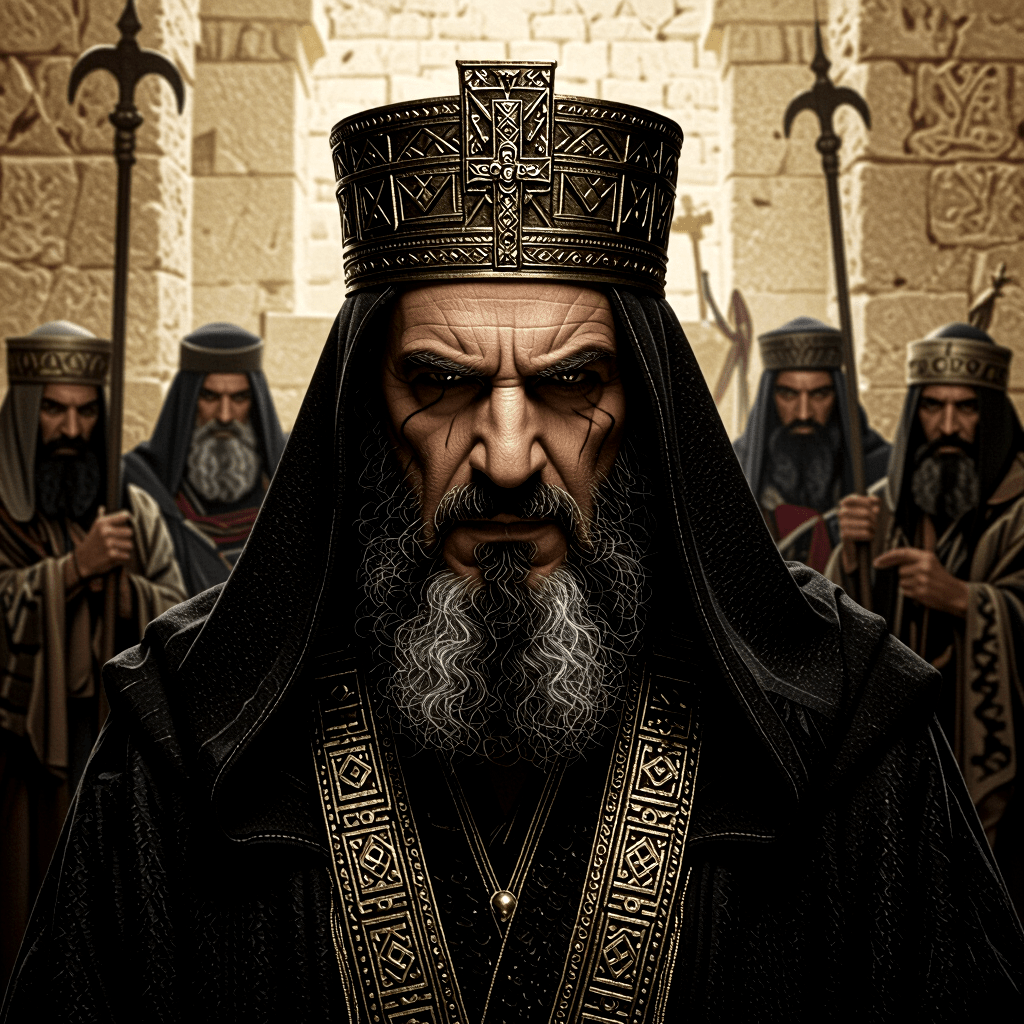
His trial itself was an act of violence — the opening steps of the cross.
And why does this matter? Because Jesus is the only perfectly innocent Man ever prosecuted. He endured false accusations so God could declare the guilty — us — righteous. His substitution didn’t begin on the cross; it began in the courtroom of Ciaphas’ home.
THE SCOURGING AND THE THORNS — MORE THAN BRUTALITY
If the trial was illegal, the scourging was inhumane. Roman scourging wasn’t a simple whipping; it was a calculated torture method designed to bring a victim near death.
The flagrum — the Roman scourge — contained leather straps weighted with jagged bone, lead balls, and pieces of metal. Each lash tore flesh from the victim’s back, ripped muscle, and sometimes exposed ribs or organs. Many victims died before their execution ever took place.
Jesus endured this before the crucifixion.
When Pilate presented Jesus to the crowd after the scourging, Jesus was already half-dead. Isaiah 52:14 suddenly becomes vivid: “His appearance was marred more than any man.”
And then came the crown of thorns. Most people treat it as another moment of mockery, but the symbolism is breathtaking.
Thorns were not random. They were the first visible sign of the curse in Genesis 3. When Adam sinned, God declared, “Thorns and thistles the ground will produce.” They were a symbol of the fall — of humanity’s rebellion and the brokenness of creation itself.
So when the soldiers twisted a crown of thorns and pressed it onto Jesus’ head, they unknowingly crowned Him with the very curse He came to bear.
The King wore the curse…
to remove the curse.
Their mock coronation became an accidental proclamation of His true identity.
And Isaiah had foretold this moment too: “By His wounds we are healed.”
THE CRUCIFIXION WE THINK WE KNOW — BUT DON’T
When we picture the crucifixion, we’re often influenced by artwork or films. But the Gospels, written to people who had seen crucifixions firsthand, don’t explain the mechanics — because everyone already knew.
We don’t.
For starters, Jesus did not carry the entire cross as depicted in most illustrations. The vertical beam was already embedded in the ground at the execution site. Jesus carried the patibulum, the heavy crossbeam weighing roughly 100–125 pounds — enough to crush a man who had just been scourged to the edge of death. No wonder He collapsed.
Then there are the nails. Although Christian art places them in the palms, archaeology and Roman practice indicate they were almost certainly driven through the wrists. Nails through the palms would tear through under body weight; nails through the wrists would hold a man in place while crushing the median nerve — a pain so intense it gave us the English word “excruciating,” literally meaning “from the cross.”
Crucifixion victims normally died from suffocation. To inhale, a victim had to pull up on the nails and push up from the feet, scraping their shredded back against the rough wood. To exhale, they had to push up again. Every breath was agony. This explains why Jesus’ statements from the cross are short — and why breaking the legs of the other two men hastened their deaths instantly.
When a soldier pierced Jesus’ side with a spear, it wasn’t to kill Him — it was to confirm He was already dead.
And all of it — every detail — fulfilled prophecy:
Not a bone of His body was broken, just like the Passover lamb in Exodus 12 and the prophecy in Psalm 34. And Zechariah 12:10 foretold the piercing centuries earlier. Isaiah had seen it too, declaring, “He was pierced for our transgressions… It pleased the LORD to crush Him.”
Jesus experienced ultimate injustice — and in doing so accomplished ultimate justice.
THE GREAT REVERSAL
At the center of the cross is a stunning reversal:
The Innocent is condemned
so the guilty can be freed.
The Righteous One is crushed
so the unrighteous may be forgiven.
The Sinless One wears the curse
so the cursed may receive blessing.
Isaiah says, “By His knowledge the Righteous One, My Servant, will justify many.”
And when Jesus cried out, “It is finished,” it wasn’t the cry of defeat — it was the cry of victory, of redemption completed, of justice satisfied.
In a world that shouts about injustice, the cross stands as the place where the greatest injustice ever committed became the greatest act of mercy God ever displayed.
The trial, the scourging, the thorns, the nails, the spear — they weren’t random details. They were the very means by which God redeemed sinners.
And that is why the cross is not just the center of Scripture —
It is the turning point of history…
…and the foundation of our hope.
 Contending For Christ